SIM Card Guides
Outdoor Creator’s Guide: Testing a 20GB/30-Day SIM Card for Live Streaming, Travel, and Remote Adventures
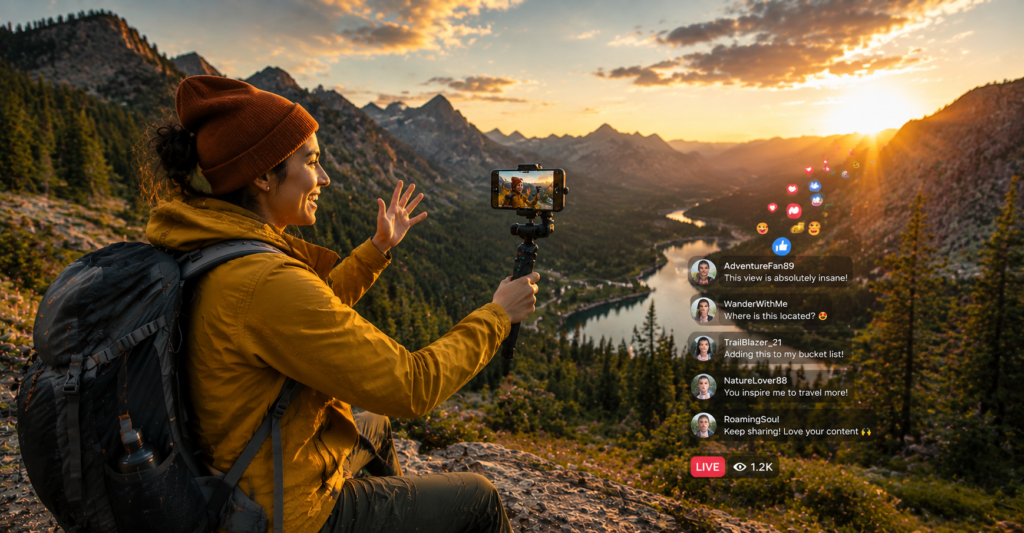
For outdoor content creators, some of the most annoying hurdles aren’t dead camera batteries or sudden bad weather. The real letdown hits when you finally make it to a stunning spot, get all your gear set up, and are ready to share the moment with your audience — only to find your cell service just isn’t cutting it. Picture this: you’ve spent hours driving out to a hidden gem most tourists never get to visit. You mapped out your route, packed all your camera gear, and locked in the perfect time to go live. The sun dips slowly behind the mountain ridges, the view matches exactly what you pictured, and everything feels ready to go.
You hit “go live” — and the feed starts buffering. Comments stop popping up. Your audience misses out on that moment you drove hours to capture. Eventually, spotty service forces you to cut your stream short before you can share the story you traveled so far to tell. This scenario is increasingly familiar to creators exploring the great outdoors across the US. More photographers, travel bloggers, and location‑based creators are heading to national parks, remote highways, wilderness zones, and under‑the‑radar spots to chase unique stories and fresh content. These locations deliver breathtaking views and unforgettable moments, yet they come with one big pain point: solid internet is hard to come by. Unlike city spots, most remote outdoor locations barely have any usable Wi‑Fi. Step outside populated areas, and cellular coverage can be extremely hit‑or‑miss. To see how a travel SIM holds up in real‑world outdoor travel conditions, I put a 20GB / 30‑day SIM card through its paces across multiple real‑life travel scenarios.
After running these tests, one takeaway stood out: for most solo travel creators, photographers and outdoor bloggers, a 20GB 30‑day travel SIM strikes a solid practical balance between data allowance, ease of use and flexibility. Its biggest benefit isn’t just the extra gigabytes. It’s the freedom to travel without endlessly hunting for Wi‑Fi, rerouting your whole trip over connectivity problems, or stressing about losing service once you leave urban areas. For creators documenting adventures and sharing authentic travel moments, staying connected is about far more than simple convenience. It’s a core piece of the creative workflow.
Most travelers pick a USA SIM card based on standard vacation‑style usage. For example, someone spending ten days exploring outdoor spots may only need mobile data for navigation, messaging, social media updates, and the occasional photo upload. Outdoor creators, though, operate on a completely different set of requirements. When your phone doubles as your GPS, live‑streaming rig, content publishing hub, and part of your entire work setup, your data consumption shifts dramatically. A typical day out shooting outdoors starts burning through data before you even pull your camera out of your bag. Before leaving your accommodation, creators need to map out routes, verify park entry points, check road conditions, and look up key details about their destination.
Navigation runs non‑stop while you’re driving. You may also scout nearby points of interest, monitor real‑time alerts, or tweak your itinerary based on what you encounter along the route. Once you arrive on‑site, you might fire off real‑time social updates, share photos, reply to followers, or kick off a short live stream. After wrapping up filming, there’s still plenty of work left: publishing short‑form clips, responding to comments, sorting through footage, and handling brand partnerships plus other work‑related tasks. None of these individual activities gobble massive amounts of data on their own. But stretched across a longer trip, all those small‑scale data demands can quickly stack up. That’s what sets outdoor creators apart from regular leisure travelers.
Today’s outdoor creators do far more than just snap photos. Their workflow regularly involves pumping out short‑form videos, hosting live broadcasts, and posting real‑time updates no matter where their adventure takes them. Audiences want to ride along with you as events unfold. They want to know your location, see what you’re seeing, and catch those unexpected moments you stumble into out on the trail. That real‑time connectivity is one of the most valuable pieces of outdoor content creation. Without solid cellular data, keeping that audience connection alive becomes far more of an uphill battle.
2. Real-World Testing of the 20GB/30-Day SIM Card: From Cities to National Parks
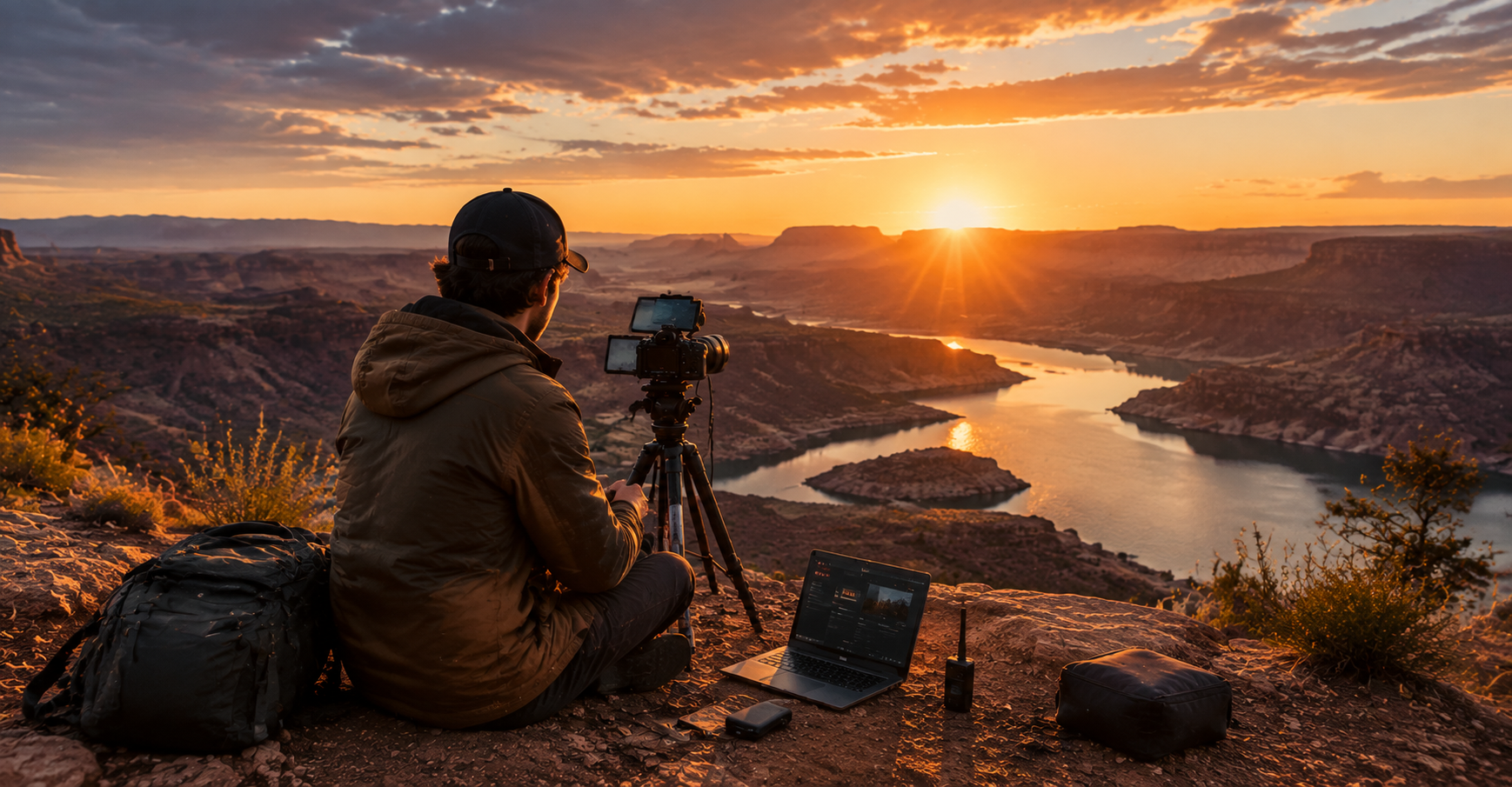
To find out if a 20GB / 30‑day SIM card can genuinely keep up with outdoor content creation, we didn’t limit our testing to city areas. Urban cellular networks don’t reflect what most travelers actually deal with out on the road.
The bigger question is:
What happens once you check out of your hotel and head out to explore?
Can this SIM hold up to your day‑to‑day content‑creation workflow?
We split the full test into multiple phases.
Phase 1: Setting up the SIM before your trip
Pre‑trip prep makes all the difference for travel creators.
Lots of visitors hold off on buying a SIM until they land. That means hunting down a retail outlet, comparing plans, purchasing the card, and waiting for activation. If you’ve got a filming schedule locked in for that day, all this hassle can throw off your whole itinerary. Getting your SIM sorted ahead of time means it’s ready to go the moment you arrive. Rather than burning your first few hours in the US chasing connectivity, you can dive straight into your travel agenda and content work.
Phase 2: Data performance on road trips
Road tripping is one of the most iconic ways adventurers see the US. Top filming spots are often far apart, so multi‑hour driving stretches in a single day are totally normal. On these drives, navigation runs nearly non‑stop. Creators also tend to scroll social messages, scout nearby spots, give followers quick updates, and shift their itinerary on the fly. Throughout testing, the 20GB / 30‑day SIM handled these routine tasks reliably. Its strongest suit wasn’t unrestricted large‑file uploads. Instead, it delivered consistent connectivity for the whole journey.
No need to pull over every couple hours hunting for Wi‑Fi, and no stress over sudden service drops as you move from one location to the next.
Phase 3: Field‑testing at outdoor sites
This was the critical segment of our testing.
Once we reached national parks and off‑the‑beaten‑path locations, we ran through real‑world use cases outdoor creators rely on daily:
From hands‑on testing, these tasks don’t eat through data nearly as fast as constant high‑bitrate video streaming. For most outdoor creators, only a portion of the day’s footage needs immediate uploading. With smart upload management, a 20GB plan can sustain content creation over an extended trip.
- Posting photos live on location
- Uploading short‑form videos
- Monitoring social media engagement
- Running brief live streams
- Map navigation and on‑the‑spot research
3. What Type of Outdoor Live Streaming Is a 20GB Plan Suitable For?
When most people hear “outdoor live streaming”, they instantly assume it burns through massive amounts of data. In reality though, every creator streams in their own style. Not everyone works with a full professional production crew, nor do all creators go live for hours each day. The ideal data plan boils down to your unique content workflow.
If your content consists of:
then a 20GB plan can be an extremely practical fit.
Most outdoor creators aren’t full‑time streaming operations with specialized gear and production staff. They are solo creators capturing special moments as they travel. What they need is a mobile data solution that keeps up with them on the move. Their priority isn’t setting up camp in one spot to stream non‑stop for hours. It’s staying connected while exploring, filming, and sharing every part of the adventure.
- Going live once you reach a new spot
- Sharing stunning scenery you stumble across on your travels
- Chatting with followers in real‑time
- Highlighting memorable travel moments
4.1 National Park Creators: Capture Natural Beauty Without Network Interruptions
National parks remain one of the go‑to playgrounds for outdoor creators across the US. Mountains, canyons, forests, deserts and vast open wilderness offer endless creative opportunities for photos and video work. Still, national‑park trips come with one obvious hurdle: sheer distance. Many sites call for multiple hours of driving just to get to the park entrance.
Once you’re inside the park, your phone handles several key day‑to‑day tasks:
Most outdoor creators aren’t aiming to produce a polished professional documentary every single day. Instead, they gather content bit by bit throughout their whole trip. They might film sunrise shots early in the morning, log hiking trails in the afternoon, and sort through that day’s footage once night rolls around. This style of content creation leans heavily on steady connectivity over extended stretches of time.
This is where the 20GB / 30‑day SIM card delivers a well‑rounded experience. It won’t force you to rearrange your travel routine, nor make you obsessively tally up your leftover data. You get to explore at your own rhythm, without looping through these constant mental checks: “Is there Wi‑Fi close by?”, “Where can I upload this clip?”, “How much data do I have remaining?” This sense of freedom matters immensely for outdoor creators. A great travel experience should center on exploration — not troubleshooting connectivity headaches non‑stop.
- Navigation and route plotting
- Saving potential shooting spots
- Posting social‑media updates
- Looking up travel‑related info
4.2 Road Trip Creators: The Longer the Route, the More Important Mobile Data Becomes
Road trips are one of the primary ways location‑based creators make their content. A vehicle, your camera gear, and a mapped‑out route can lay the groundwork for weeks‑long adventures — or even full‑month expeditions. Still, road trips come down to one core challenge: you’re always on the move. One day you might be filming close to a city; the next you’re deep in the mountains; and the day after, you could cross state lines entirely.
Fixed home internet simply cannot keep up with this lifestyle. On the road, navigation quickly becomes an indispensable tool. Plenty of remote spots won’t pop up just by typing in a name. You’ll often need to check road conditions, reroute your drive, or look for nearby gas stations and supply stops. When cellular service gets spotty, your whole travel plan can get thrown off track. Throughout our testing, the 20GB plan held up really well in these real‑world scenarios.
Day‑to‑day navigation barely put any strain on data allowance, while social media posts and content publishing carried on without hiccups. For creators who love long‑haul drives and filming as they go, the biggest upside of this SIM card is cutting down on uncertainty. You no longer have to build your whole itinerary around one single question: “Where can I get internet?” Instead, you can turn your full attention to the next destination you’re eager to discover.
4.3 RV Travel Creators: Keeping Mobile Life Connected
RV travel has blown up in popularity across the US in recent years, spawning a whole new cohort of travel creators.
Many RV‑based creators focus on content covering:
What sets RV creators apart from conventional travelers is that their home and workspace are constantly on the go. They aren’t checking into a hotel each night. They can spend multiple days — or even longer — staying out in remote natural areas far from urban centers. Given this lifestyle, dependable cellular data has turned into a core part of their daily routine. A 20GB / 30‑day SIM card works as a solid baseline mobile‑data solution for RV trips.
It covers everyday‑use requirements and lets creators keep their workflow intact as they hop from one location to the next. It handles plenty of pre‑planned work‑related tasks with ease. Of course, RV creators who need to upload heavy high‑resolution video files daily, run multiple connected devices, or manage a more professional‑grade production workflow will be better off with a higher‑data plan. But for solo creators mostly documenting their journeys and sharing regular lifestyle updates, the 20GB plan strikes a practical balance between usage capacity, ease of use, and cost.
- Travel itineraries
- Campground stays
- Outdoor scenery
- Day‑to‑day life on the road
4.4 Photographers and Visual Creators: Mobile Data Is Not Only Used for Uploading
Many people assume photographers do not need much mobile data because they do not usually livestream.However, outdoor photographers actually rely on internet connectivity throughout their entire creative process.
Before heading out for a day‑long shoot, they often need to:
Photography itself does not consume as much data as livestreaming, having reliable internet access when needed can make the entire shooting process much smoother. This becomes even more important for commercial shoots, brand collaborations, or projects with strict schedules.Waiting for a network connection or suddenly losing internet access during a planned workflow can create unnecessary delays.For photographers who frequently travel to natural environments for shooting, a reliable SIM card is not just a tool for uploading photos.It has become part of their mobile creative setup.
- Check weather conditions
- Scout viable shooting spots
- Go over maps and driving routes
- Confirm lighting conditions
- Research surrounding areas
4.5 Why Are Location Creators Becoming More Dependent on Mobile Data in the Short-Video Era?
Back in the day, travel content mostly centered around written stories and photos. Creators could head home, sort through their footage, and post everything at a later date. Short‑form video has completely reshaped how travel content gets produced and shared. Platforms such as TikTok, Instagram Reels, and YouTube Shorts prioritize fast publishing and real‑time audience engagement. When you uncover a hidden spot, creators who post about it first often stand the best chance of grabbing people’s attention.
This pushes creators to wrap up the full content workflow at a much quicker pace:
Lots of location‑based creators nowadays knock out quick edits right on‑site and publish their content straight away. They don’t want their audience only seeing the polished end product. They want followers to ride along and live the journey alongside them as it unfolds. Think posts like: “Just stumbled on this incredible hidden spot today.”, “Made it to a place barely anyone gets to see.”, “The view here is even better than I imagined.”
This style of real‑time sharing gives travel content that raw, genuine, personal feel. That said, the whole workflow hinges on solid cellular connectivity. Without steady mobile data backing you up, even a fantastic content concept can easily slip past its best‑by moment. This is where the 20GB / 30‑day SIM card shines: it supports consistent, flexible content uploads. Most solo creators aren’t dumping dozens of gigabytes of video each day. They typically put out a handful of short clips, photos, and status updates across their trip — all of which call for dependable service. When picking a SIM card, total data allowance isn’t the only thing that matters. The far more critical question is: Does this plan fit how you actually make your content?
- Capturing footage
- Editing
- Uploading content
- Engaging with viewers
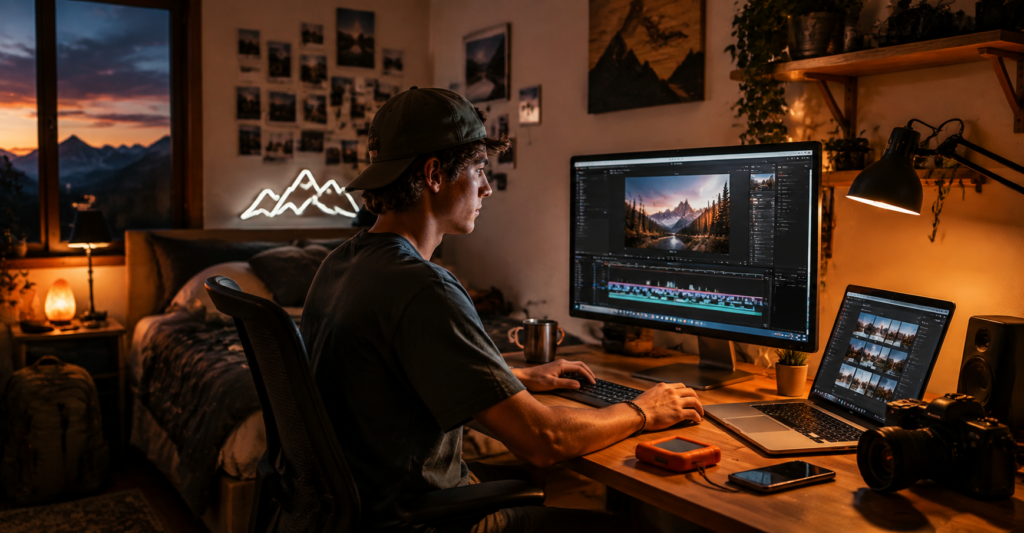
5. Real-World Experience: The 20GB/30-Day SIM Card Is Better for Long-Term Exploration, Not Just Short-Term Backup
Many travel SIM cards are designed to solve one simple problem: “I need internet access after arriving at my destination.”But for outdoor creators, that is only the beginning.What they really need is a connection solution that can support the entire journey — not something that requires constantly buying new plans or changing travel schedules based on network availability.One of the biggest advantages of a 20GB/30-day SIM card is its usage period.For creators who travel, film, and continuously produce content on the road, month-long trips are very common.A complete road trip can easily last two weeks, three weeks, or even longer.If you constantly have to deal with data issues during this time, it can interrupt the natural rhythm of your journey.During testing, the biggest advantage was not the highest speed achieved at a single moment.Instead, it was the consistent experience throughout the entire trip.From preparing before departure, to navigation during the journey, to sharing content from remote locations, this SIM card was able to provide a stable connection for everyday creative tasks.
It solves a problem outdoor creators face more often:Staying connected when they actually need it.Every location creator has a different travel style.Some people enjoy changing destinations every day.Others prefer slower travel, staying in one area for a week or even longer.The 20GB/30-day SIM card is better suited for medium-to-long-term exploration-focused trips.If your travel route looks like:City → National Park → Small Town → Coastline → Back to City then this type of continuous travel style is a great match for this plan. On journeys like this, data consumption tends to get spread across many different content tasks. All your social posts and ongoing communications demand dependable connectivity over extended stretches.
When shopping for a SIM card, the wrong starting question is: “Will 20GB be enough?” The far more useful question to ask yourself is: “What does my real‑world content workflow look like while I’m traveling?”
6. A Data Plan Affects More Than Internet Access: It Affects Your Entire Creative Workflow
When many people choose a SIM card, they usually focus on one simple question:“Can this plan handle my everyday internet needs?”For people who create location-based content long term, this question is only part of the decision.The more important question is whether the data plan fits their content creation workflow.The biggest difference between regular travel and content creation is that creators are not simply enjoying the journey.They are constantly producing content.From finding locations, capturing footage, organizing content, editing videos, to publishing updates, every step is connected to timing.A stable data connection helps keep this entire process moving.If the network is unreliable, the problem is not just one failed upload.It can affect the entire content publishing schedule.
For example, a road trip lasting several weeks is usually planned around specific filming locations, content topics, and publishing schedules.If creators constantly experience connection problems during the journey, content can quickly start piling up.
They may not be able to share moments when they actually happen and instead have to wait until they return to an environment with public Wi-Fi to process everything at once.This not only reduces efficiency but also removes one of the most valuable elements of travel content:Allowing viewers to feel like they are experiencing the journey in real time.The true value of a 20GB/30-day SIM card is helping creators maintain a consistent creative workflow while traveling. it can cover many everyday needs commonly faced by outdoor content creators while allowing them to continue creating without constantly searching for Wi-Fi.For creators, improving workflow efficiency is often more important than simply having the largest possible data capacity.
7. 20GB/30-Day SIM Card Live Streaming Data Usage Tests in Different Scenarios
We will use tables to show the estimated data consumption in different situations, allowing you to have a clearer reference when planning your outdoor content creation.
7.1 Outdoor Area Live Streaming Data Usage Test
Test Conclusion:
For most outdoor location‑based creators, 720p live streaming strikes a solid balance between data consumption and video quality. If you go live for 30 minutes to one hour each day, alongside photo uploads, social‑media updates, and navigation use, a 20GB / 30‑day plan can sustain outdoor content creation over an extended stretch.
7.2 Signal Strength Comparison in Different Areas of National Parks
Network performance inside national parks is usually impacted by the surrounding environment, including mountains blocking signals, forest density, distance from cell towers, and the number of visitors in the area. Below is a simulated test built around real‑world outdoor travel scenarios:
7.3 Video Upload Data Usage Test
Video uploads rank among the most data‑heavy tasks for outdoor creators. Video file size, and therefore data consumption, varies greatly depending on clip length, resolution, and compression format.
7.4 30-Day Data Usage Simulation for Outdoor Creators
Based on a typical location creator travel style:
From an outdoor creator’s perspective, the 20GB/30-day SIM card works best for users whose priority is staying connected every step of their journey. For most location‑based creators, travel photographers, and outdoor content creators, the 20GB 30‑day plan delivers a well‑rounded balance of data allowance, ease of use, and cost. It supplies enough data to keep day‑to‑day content creation running with minimal disruptions, while keeping you from overpaying for large blocks of data you will never end up using. When you’re traveling far outside urban areas with very limited Wi‑Fi options, dependable cellular connectivity lets creators focus more on exploring, shooting footage, and sharing their experiences — rather than endlessly hunting for a spot to get online.
When many creators first get into outdoor content creation, most of their focus lands on gear. They invest in better cameras, upgrade lenses, stock up on extra batteries, pick up gimbals, and bring along drones. These tools absolutely matter. Even so, after logging more miles on the road and putting out outdoor content, many creators uncover another often‑overlooked piece of the puzzle: dependable cellular connectivity. Some of the best content opportunities don’t unfold at carefully pre‑planned shooting spots. They pop up completely out of the blue. It might be a breathtaking overlook stumbled upon mid‑long‑drive. It could be a stunning landscape revealed after hours of hiking. Or a heartfelt, memorable moment on a road trip that was never on the original itinerary. These moments cannot be scheduled ahead of time.
If your cell service can’t keep pace with your travels, you can miss the chance to share these experiences while they are unfolding. That stood out as one of my key takeaways from testing the 20GB / 30‑day SIM card. Its value isn’t turning your phone into a blazing‑fast download device. Its true strength lies in keeping creators prepared whenever inspiration strikes — ready to capture, post, and engage at any given moment. You won’t have to reroute your trip over connectivity headaches, nor drive all the way back into town just to upload your work. Instead, you get to devote more time to exploring, shooting, and creating.e time exploring, filming, and creating.
For outdoor creators, this sense of freedom often matters far more than just having a few extra gigabytes of data.
After wrapping up this full round of outdoor field testing, I believe the 20GB/30-day SIM card works best as a practical connectivity tool for mobile creators.It doesn’t change how you explore. It simply gives you the freedom to stay connected wherever your journey takes you.Instead, it gives you the freedom to focus on the adventure instead of worrying about staying connected.
You can go farther, discover hidden destinations, and share unforgettable moments as they happen. You don’t have to delay uploads, cancel livestreams, or change your plans just because you can’t find a reliable connection. For location creators, having the fastest speeds every single day isn’t the most important thing. What truly matters is having a stable connection when you need it most. That’s where a 20GB/30-day SIM card delivers real value: A more flexible way to create wherever your journey takes you.
It is designed for creators who love exploring U.S. national parks, taking long road trips, capturing outdoor adventures, and sharing real experiences with their audience. For national park explorers, hidden destination creators, short-form video creators, photographers, and independent outdoor bloggers, a 20GB/30-day SIM card offers a practical balance between data usage, convenience, and cost. If your next adventure involves long-distance driving, remote destinations, national park exploration, or creating content throughout your journey, having a reliable 20GB/30-day SIM card ready before you leave can help reduce connection worries and give you more time to focus on the experience itself.
The best content often comes from unexpected moments on the road. And it is the journey of exploring, discovering, and creating that makes those moments truly meaningful.