eSIM Basics & Setup
3GB/3-Day, $8.5 eSIM Guide: Who Is This Short-Term Plan Best For?
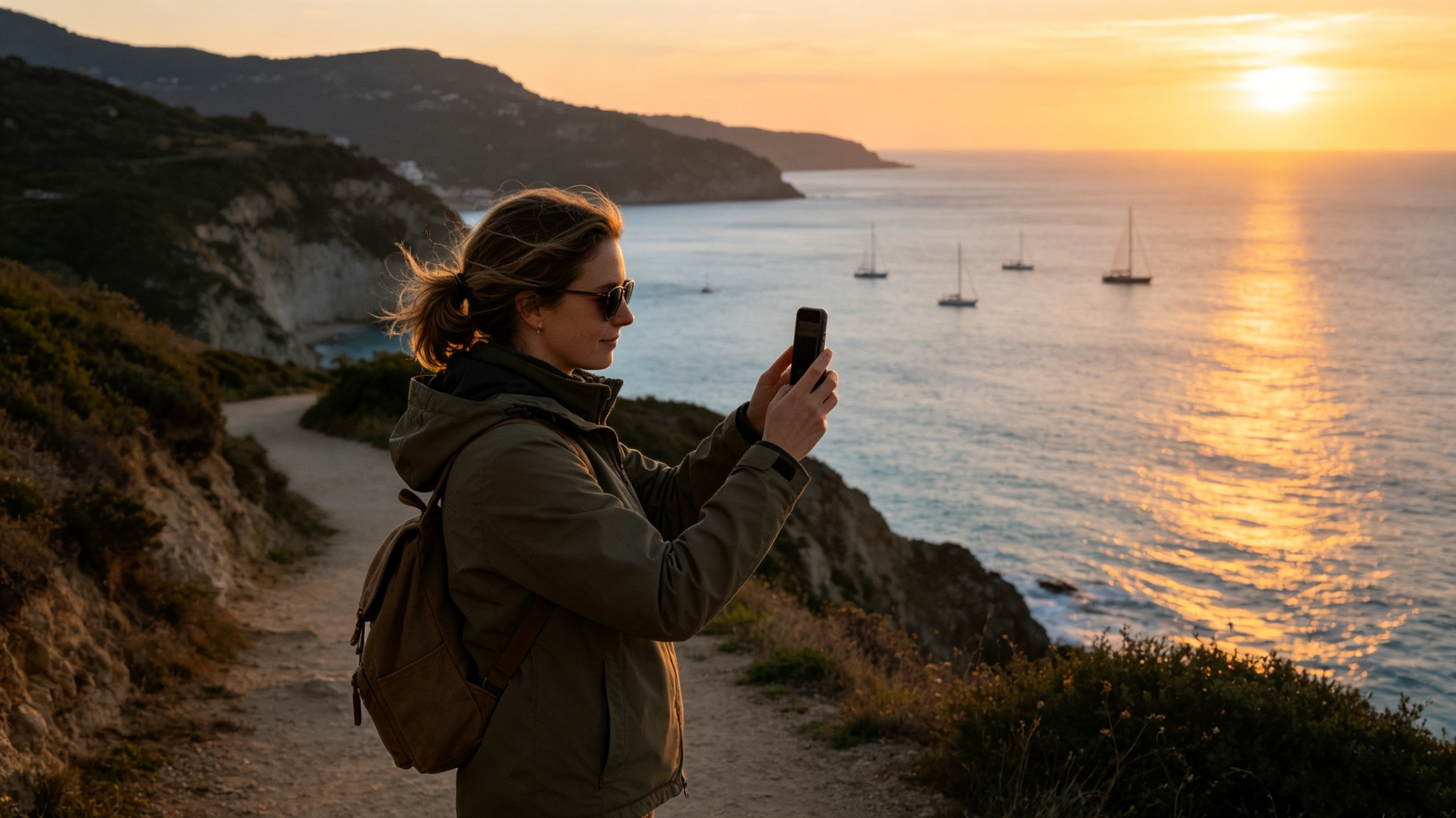
A 3GB data allowance, 3-day validity, and an $8.50 price tag make this type of eSIM fairly easy to place. It is not designed to replace your everyday mobile plan or support heavy, long-term data use. Instead, it is built around a much more specific need: staying connected for a few days.
That can mean a short business trip, a quick cross-border visit, a few days at an event, or simply having mobile data available whenever you step away from hotel or office Wi-Fi. In these situations, the question is not just whether 3GB is enough. You also need to think about whether three days line up with your trip, whether you still want to keep your regular SIM active, and how often you will actually be away from Wi-Fi.
When those details are clear, choosing a plan becomes much easier. That is where 3GB/3days eSIM makes sense: the data allowance, validity period, and price are all built around a clearly defined short-term window.
1. Travelers with a trip that lasts just a few days
A three-day trip is one of the clearest use cases for this kind of plan.Think about a Monday-to-Wednesday business trip, a two- or three-day trade show, a short training session, or a quick weekend getaway. Your travel dates are already set, so your need for mobile data tends to follow the same schedule.That makes the validity period easier to manage. Instead of working around a much longer plan, you can focus on the actual days when you expect to need mobile data.
Take a three-day trade show as an example. On day one, you might need data while getting from the airport to your hotel and checking event information. Day two could be mostly spent at the venue, where Wi-Fi is available. On day three, you may only need mobile data while heading back to the airport. Your data use changes throughout the trip, but the overall timeframe is still easy to define.
The same idea applies to short family visits or quick trips across a nearby border. Your accommodation may have Wi-Fi, while mobile data is mainly useful when you are out and about. Once the trip is over, that need naturally comes to an end.For travelers with a fixed departure and return date, 3GB/3days eSIM fits neatly into that kind of schedule. You can decide when to activate it, how you expect to use it during the trip, and when you will no longer need it.In other words, this type of plan works best when your data needs have a clear start and finish rather than stretching over an open-ended period.
2. People who want to keep their main number and add a separate data line
Not everyone wants to replace their regular SIM card just because they are traveling for a few days.Your existing number may be tied to banking alerts, work systems, account verification, family contacts, or messaging apps. Even on a short trip, there is usually no reason to disrupt all of that just to get mobile data.An eSIM can simply sit alongside your regular line. Your main SIM stays active for calls, texts, and verification codes, while the additional eSIM handles mobile data.
That setup is especially practical for business travelers. Your work number stays exactly as it is, while the temporary data connection takes care of internet access during the trip. Personal travelers can use the same approach, keeping their usual number while switching mobile data to the new eSIM when needed.The exact setup depends on your phone. Some devices let you keep both lines active at the same time, while others require you to manually select which line handles mobile data. Settings for roaming, default data lines, and dual-SIM features can also vary by device.
From a practical point of view, 3GB/3days eSIM works well as a temporary data line rather than something that requires you to rebuild your whole mobile setup.That also means you do not need to overcomplicate the process. Check that your phone supports eSIM or dual-SIM use, set your preferred data line before you leave, and keep your regular number in place.Once the phone setup is sorted, the next question is where you will actually use the data.

3. People who have Wi-Fi most of the time but still want mobile data on the go
Short trips rarely mean using cellular data from morning until night.Hotels usually have Wi-Fi. Offices have fixed internet. Conference venues may offer wireless access as well. Mobile data becomes more important when you leave those places.Maybe you need to pull up a boarding pass at the airport, check a route while catching a train, look up a restaurant on the way there, open a digital ticket, or reply to a work message while walking between locations. None of these tasks necessarily uses a lot of data, but they all depend on having a connection when you need one.That is an important distinction. The value of mobile data is not always about how much you consume. Sometimes it is simply about having access at the right moment.
You might spend the morning at a hotel, switch to mobile data while traveling, reconnect to Wi-Fi at a meeting venue, and then use cellular data again in the afternoon. Data use comes in bursts rather than as a constant stream.In that kind of routine, 3GB becomes less of an abstract number and more of a practical three-day allowance. Your fixed networks handle most indoor use, while cellular data fills in the gaps when you are out and moving around.
For this type of traveler, 3GB/3days eSIM can work nicely as a mobile-data layer on top of existing Wi-Fi, giving you a connection outside the places where you already have internet access.That split also makes the data easier to manage. You know roughly when you will be on Wi-Fi and when you will be relying on cellular service, so you can plan your usage around your actual schedule.
With those user profiles in mind, the next thing to look at is why the plan is structured around 3GB and three days in the first place.
4. Why 3GB for 3 days? It creates a clear short-term usage window
The two numbers solve two different problems.The 3-day validity defines how long the service is available. The 3GB allowance defines how much mobile data you have during that period.Put together, they give you a fairly simple framework. First, you can ask whether three days match your trip. Then you can look at whether 3GB fits the way you normally use mobile data.
For example, a three-day business trip may involve a lot of time in hotels and conference rooms with Wi-Fi. Most of your cellular usage might happen while traveling between locations. A city break may look different, with more mobile browsing and online services during the day and Wi-Fi back at your accommodation in the evening.The pattern changes, but the basic planning method stays the same.
The 3GB allowance also gives you a useful reference point. Spread evenly across three days, that works out to around 1GB per day. That does not mean you need to use exactly 1GB every day. You may use very little on one day and more on another. What matters is having a clear overall allowance for the full trip.That makes it easier to think about your needs in context. How much of the day will you actually spend away from Wi-Fi? What will you be doing online? How often will you need mobile data between fixed locations?
That is why 3GB/3days eSIM is less about chasing the biggest possible data allowance and more about matching the amount of data to a defined period of use.
5. What does $8.50 really mean? About $2.83 per day
At $8.50 for three days, the average cost comes to about $2.83 per day.That is a simple way to look at the price of a short-term plan. Instead of comparing the total cost in isolation, you can think about what you are paying across the actual days you expect to use the service.For a three-day trip, $8.50 becomes a clearly defined part of the travel budget. There is no need to stretch the calculation across a longer period that you are not actually using.Of course, the daily price only tells part of the story. What you are really paying for is a combination of three things: three days of service, 3GB of data, and access to the supported mobile networks at your destination.
Imagine a short three-day trip where your hotel and most indoor locations already have Wi-Fi. In that situation, the main reason to buy mobile data is to stay connected at the airport, during transportation, while walking around, or whenever you are away from a fixed connection. Looking at the $8.50 as a short-term connectivity budget makes more sense than simply asking how much each gigabyte costs.
Your travel style also matters. Someone who takes occasional short trips may care most about the total amount paid for one trip. A frequent business traveler may be more interested in how different plans compare over the same number of days.Either way, the comparison does not need to be complicated. Look at the validity period, check the data allowance, and then factor in the price.At roughly $2.83 per day, 3GB/3days eSIM gives you a straightforward benchmark for short-term mobile data spending.

6. What to check before buying: four details that affect how you will use it
The first thing to check is coverage.Make sure your destination is actually included. This is especially important when your trip crosses borders. A regional label does not always mean every country in that region is covered, so check the specific destination list on the product page.
Next, look at the local network connection.It is useful to know which operators the eSIM can connect to and whether 4G or 5G is supported. If you will be moving between cities, the available partner networks can also matter. When a provider lists the supported networks, it is worth taking a quick look before buying.
Then check when the validity period starts.Three days can be counted from different points depending on the provider. Some plans start when you first connect to a supported network, while others may begin at activation or follow another rule. Installing the eSIM and actually starting to use it are not necessarily the same thing.
Finally, check hotspot support and data rules.If you plan to connect a laptop or tablet through your phone, make sure personal hotspot is allowed. It is also worth checking what happens when the 3GB allowance is used up. Some plans stop data access, some reduce the speed, and others let you purchase additional data.
First-time eSIM users should also take a quick look at the installation and activation instructions. Knowing how to scan the QR code, select the eSIM for mobile data, and handle data roaming settings in advance can save you time once you arrive.For anyone preparing to buy 3GB/3days eSIM, the goal is not to study every line of the product description. Focus on the details that actually affect your trip.
Final decision: Does the plan actually fit your trip?
Instead of asking whether a plan is simply “good,” it is more useful to ask a practical question:Do I actually need this kind of data setup for the next few days?
Start with the timing.
If your trip is only a few days and the dates are already fixed, a three-day validity period is easy to work with. Then look at your phone setup. If your regular number needs to stay active for texts, calls, or verification codes, an additional data line can work alongside it.Next, think about your internet access throughout the day. If your hotel, office, or event venue already has Wi-Fi, your mobile data will mainly cover the time you spend out and about. That is a natural fit for a short-term data plan.Finally, look at the budget. At $8.50 total, or about $2.83 per day, you can decide whether the cost fits comfortably into the communication budget for the trip.When those pieces line up, 3GB/3days eSIM becomes a practical option to include in your final shortlist.
The decision can really be boiled down to four things: time, data, device, and budget.
Your trip length determines whether the validity period makes sense. Your usage habits determine whether 3GB is a comfortable fit. Your phone determines whether the eSIM can be used the way you want. And your budget tells you whether $8.50 works for this particular trip.Then add the destination coverage, local network access, and hotspot rules to the checklist, and you have a clear way to evaluate the plan before purchasing.
For a three-day business trip, a short event, a quick cross-border stay, or another temporary need for mobile data, the most important thing is not whether the numbers look impressive. What matters is whether the plan lines up with the way you will actually use your phone.
When the validity period, data allowance, and price match the trip, the value of a short-term eSIM becomes very straightforward: you have mobile data when you are out, it is there when you need it, and your normal phone setup can stay in place.