Destination Internet Guides
7GB/15-Day SIM Card: Staying Connected Across National Parks, Campgrounds, and the Open Road
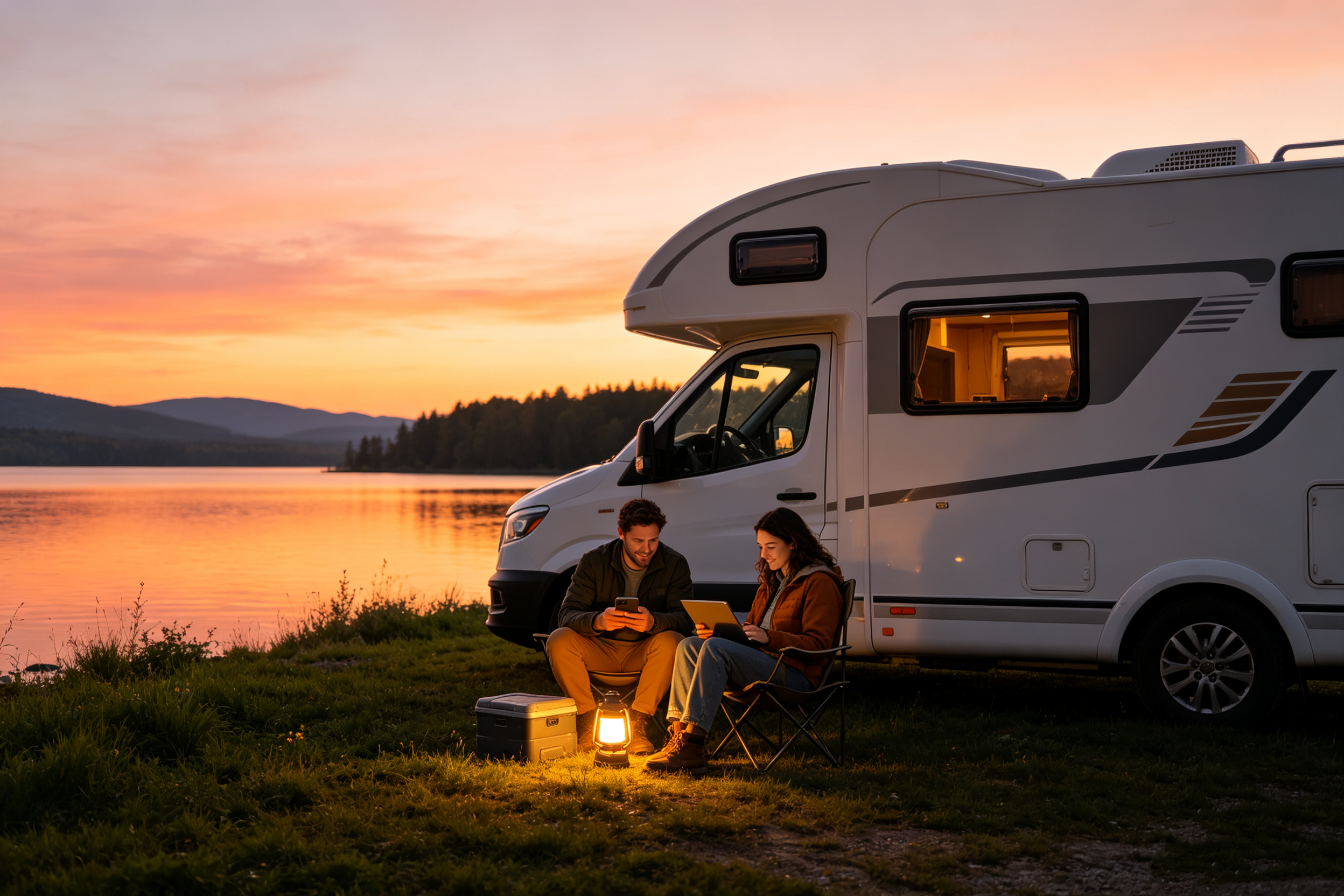
Hitting the road in an RV and heading straight into the mountains is easily one of the most relaxing ways to take a short getaway in North America. No flights to catch, no hotel check-ins, and no rigid itinerary to stick to. Your RV is your home on wheels, carrying everything you need as you roll through the mountains, forests, and national parks.
You wake up, open the door, and there’s nothing but mountain views, morning light, and fresh air outside. At night, you can sit around the campfire, cool off, and completely unplug from the stress of everyday life. Spend two full weeks driving through the mountains and national parks, and it can feel like a reset button for all the fatigue and anxiety that builds up in daily life.There’s just one problem every experienced RV traveler knows all too well: the more beautiful and remote the campsite, the worse the cell service tends to be. The deepest parts of national parks and the most scenic boondocking spots often come with weak or nonexistent connectivity.
That’s where a 7GB/15-day SIM card can make a real difference. Designed for short outdoor trips, it offers a simple way to stay connected without relying entirely on unreliable campground WiFi. For a 15-day RV adventure, it strikes a practical balance between enough data for everyday travel and avoiding the cost and hassle of paying for far more data than you actually need.Anyone who has spent time RVing in North America knows how unreliable campground WiFi can be. Many public campgrounds and private RV parks advertise free WiFi, but the actual experience can be frustrating. Speeds can be slow, connections drop unexpectedly, and during busy morning and evening hours, even sending a simple text message can become a struggle, let alone browsing the web or uploading photos.
National parks can be even trickier. Many remote parks have limited cellular infrastructure, and expanding communications infrastructure in protected areas isn’t always practical. As a result, large parts of some parks can have weak or nonexistent service.Visitor-center WiFi isn’t necessarily much better. During peak season, dozens or even hundreds of people may be trying to connect at the same time, which can make the network painfully slow or practically unusable.And once you leave established campgrounds and start boondocking, things can get even more challenging. Out in the backcountry, you may suddenly find yourself without a reliable connection for checking road conditions, weather alerts, trail information, or campground rules. Staying in touch with family can become harder too, especially when you want to send a quick “we’re all good” message or share your location.
The same goes for all those photos you take along the way. You capture an incredible sunrise, a dramatic canyon, or a sky full of stars, but instead of sharing it right away, it just sits in your camera roll until you eventually reach a town and find decent WiFi. That can take some of the fun out of sharing the trip as it happens.To figure out what actually works best for a short RV trip, I planned a full 15-day road trip through the American West, covering a mix of major national parks, established RV campgrounds, public campsites, and remote boondocking locations.Throughout the entire trip, I put a 7GB/15-day SIM card through its paces in real travel conditions, looking at everything from signal reliability and data usage to everyday practicality.
I used it for highway navigation, checking park information, staying connected around camp, occasional remote work, posting updates and photos, and keeping in touch when connectivity mattered most.After 15 straight days on the road, I’m breaking down exactly where this short-term SIM card worked well, where it fell short, and which types of RV travelers it makes the most sense for.So, is a 7GB/15-day SIM card actually worth it for a two-week RV camping trip? And is 7GB enough to cover the everyday connectivity needs that come with life on the road?That’s what this real-world test is here to find out.
The Biggest Connectivity Problems on an RV Trip—and Why Every Traveler Runs Into Them
The first time you take an RV through the American West, it’s easy to assume that having a phone plan is all you need. After a few days on the road, though, you quickly realize that cell service in a city has very little in common with what you get in a national park, deep in the mountains, or miles from the nearest town.Places like Yellowstone, the Grand Canyon, Zion, Yosemite, Big Bend, and Bryce Canyon are surrounded by mountains, canyons, forests, and wide-open high-country terrain. You can have a perfectly usable signal one minute, turn a corner, and watch it drop to one bar. Drive into a canyon or a heavily wooded area, and losing service altogether isn’t unusual. Many of these areas are remote to begin with, with relatively few cell sites nearby.That’s why the biggest connectivity problem on an RV trip usually isn’t being unable to stream a video. It’s losing service at exactly the moment you actually need it.
RV travel is different from a typical city vacation. You’re constantly moving between remote roads and overnight campgrounds, while also spending extended periods living out of the vehicle. You may not need a huge amount of data, but you do need a connection that works when it matters. Once you lose service, even simple parts of the trip can become much harder—and in remote areas, poor connectivity can also create genuine safety concerns.
Here are some of the most common connectivity problems RV travelers run into.
With all of these connectivity issues, it’s easy for first-time RV travelers to overcorrect.Some people buy huge monthly data plans because they’re worried about running out. On a two-week trip, they might use only a fraction of dozens of gigabytes and end up paying for data they never needed. Others go in the opposite direction and choose an ultra-cheap 2GB or 3GB short-term plan. That may be enough at the beginning, but halfway through the trip, the data can run out completely—leaving them without a reliable connection for the rest of the journey.
After putting a short-term SIM through a full 15-day RV trip, I found that for a typical two-week camping and road-trip itinerary, 7GB with a 15-day validity period hits a practical sweet spot between usability, reliability, and cost.It provides enough data for the things RV travelers actually need on the road without paying for a huge allowance that mostly goes unused, making it a particularly practical option for couples, families, and solo RV travelers on a short trip.
- Campground WiFi sounds convenient, but often isn’t very useful: Whether you’re staying at a national park campground, a private RV resort, or a public campground outside a small town, free WiFi tends to have the same problems: limited coverage, slow speeds, and poor capacity. In many campgrounds, the WiFi works reasonably well around the office or reception area but becomes unreliable once you get back to your RV site. Even when you manage to connect, simple text messages may be about the limit. Photos can take forever to load, videos may be impossible to stream, and things often get much worse during busy hours when everyone is online at the same time.
- Long drives can turn navigation into a source of stress: RV trips often take you along remote mountain roads, forest routes, and backcountry highways where cell coverage is sparse. Once your mobile connection disappears, live navigation can stop working. Offline maps help, but they can also be outdated. Road changes may not be reflected, campground information can be wrong, and temporary closures may not show up at all. Taking a wrong turn in an unfamiliar area can mean adding hours to the drive, wasting fuel, or ending up on a road you shouldn’t be on in the first place.
- Being offline in the backcountry can become a safety issue: Weather can change quickly in the mountains. Heavy rain, high winds, thunderstorms, rockfall, and flash-flood warnings can all develop with little notice. Without a reliable connection, it becomes much harder to check current weather alerts, park safety notices, road closures, or other emergency updates. In truly remote areas, losing cell service also means losing an easy way to contact someone for help. For solo RV travelers in particular, that can be a serious concern because family members may have no easy way to check in or know where you are.
- Everyday travel planning becomes much more difficult: An RV vacation isn’t just about parking somewhere and relaxing. Along the way, you may need to check trail difficulty, park hours, campground rules, fuel stations, grocery stores, dump stations, restrooms, or nearby places to restock. Without dependable service, you end up having to plan everything in advance. Then, when something changes—a road closes, a campground fills up, or a park suddenly limits access—it becomes much harder to adjust your plans on the fly. Instead of enjoying a flexible road trip, you spend more time working around avoidable travel problems.
- Poor service takes some of the fun out of sharing the trip: Part of the appeal of an RV road trip is being able to capture the experience as it happens. You take a photo of an incredible sunrise, a canyon overlook, or a sky full of stars and naturally want to share it with family and friends right away. But when you have no service, those photos and videos just sit in your camera roll until you reach a town and find decent WiFi. By then, the moment has passed, and the spontaneous, in-the-moment feeling of the trip is gone.

15-Day RV Trip: Can a 7GB/15-Day SIM Card Cover the Essentials?
We’ve already covered why reliable mobile connectivity matters on an RV trip, so there’s no need to go over the same use cases again. The more useful question is this: if your trip lasts 15 days, how much data is 7GB actually giving you?For a typical two-week RV road trip through the American West, 7GB falls into a practical middle ground. It isn’t meant for spending hours streaming videos on the road. Instead, it’s designed to handle the everyday connectivity you need throughout the trip.In other words, whether 7GB is enough largely depends on how you use mobile data: as a travel tool or as an entertainment connection.
1. Your connection will vary depending on where you are
An RV road trip rarely stays in one type of environment. In towns, along major highways, around visitor centers, and in more open areas, mobile service is generally easier to find and use. Once you head deeper into a national park, into the mountains or canyons, or out to a remote boondocking spot, coverage can drop off significantly.One important point is often overlooked here: a SIM card can only connect your device to an available mobile network. It cannot create coverage where there are no cell towers.
So when evaluating a travel SIM, the better question isn’t whether it will “work everywhere.” It’s whether it can provide a reliable connection in areas that actually have network coverage while giving you enough flexibility to prepare for places where service may disappear.That’s also why RV travelers shouldn’t rely on a single connectivity option. Mobile data, WiFi, and offline resources each have their place on a longer road trip.
2. 7GB works best for light but consistent data use
Fifteen days may sound like a long time, but your actual mobile data usage can be surprisingly low when you’re not constantly online.If most of the day is spent driving, hiking, camping, or sightseeing, your phone usually isn’t consuming data continuously. Instead, you’re using it in short bursts throughout the day. In that kind of travel routine, 7GB can cover a meaningful portion of a two-week trip.
What really burns through data isn’t the number of days you’re traveling. It’s a handful of high-data activities: long video streams, HD video calls, continuous photo and video backups, and extended hotspot use on a laptop or other devices.Once those become regular habits, 7GB can disappear much faster.So when deciding whether a 15-day data plan is enough, don’t just look at the “15 days.” Your daily usage pattern matters just as much as the length of the trip.
3. The real advantage of 7GB is using it alongside WiFi and offline resources
There’s no reason to expect one SIM card to handle every type of connectivity on an RV trip. A more practical approach is to divide your needs into three layers:
This setup gives you more flexibility. You don’t have to pay for a huge data package just to cover occasional heavy usage, and you’re less likely to be caught completely unprepared when you enter an area with little or no service.
For a 15-day RV trip, that balance is what makes a 7GB/15-day plan much more practical than the raw number might suggest.7GBisn’t meant to handle every connectivity need on its own. It’s one part of a broader connectivity setup for your RV trip.
- Mobile data for the things you need to stay connected to while you’re on the road.
- WiFi for downloads, backups, syncing, and other data-heavy tasks.
- Offline resources for national parks and remote areas where service may disappear entirely.
15 Days of Real-World Data Use: How Long Does 7GB Actually Last?
Most experienced RV travelers love the freedom of boondocking. Instead of staying at a paid campground, you can park out in the wild, wake up next to a lake or in the middle of the forest, and enjoy the kind of quiet and open space that makes RV travel so appealing in the first place.The downside is that connectivity at these remote sites can be much less predictable. Whether you have service often comes down to how close you are to a cell tower and what the surrounding terrain looks like.
For this test, I specifically chose several popular boondocking locations, including remote wooded areas, lakeside spots, and open land at the base of the mountains, to see how a 7GB/15-day SIM card would actually perform.At more open locations with cell coverage and within reasonable distance of nearby towns, the SIM card performed well and provided more than enough connectivity for the basic needs of an RV trip.
Once we moved deeper into the mountains and farther away from cell towers, the signal eventually disappeared. But that isn’t really a problem unique to this SIM card. When there is no cellular coverage in the area, no regular SIM card can magically create a signal.Experienced RV travelers already know that remote camping requires some offline preparation. Downloading offline maps, park information, trail guides, and entertainment ahead of time makes a big difference when you head into a true dead zone.
In that setup, the 7GB/15-day SIM card works as a reliable backup for staying connected whenever service is available, while offline resources cover the periods when you’re completely out of range. It’s a much more realistic way to approach connectivity in remote RV camping: stay flexible without relying entirely on cellular service.
The biggest question, of course, is whether 7GB can actually last for 15 days. Will you run out halfway through the trip? Or will you end up paying for a bunch of unused data?Here’s the result from my actual 15-day trip: for normal day-to-day travel use, 7GB over 15 days was more than enough for a typical short RV vacation, with plenty of data left over and no need to constantly watch my usage.
My usage was based on a fairly typical family RV routine. I used GPS navigation frequently throughout the day, stayed connected for messages, checked the weather and park updates several times a day, uploaded more than a dozen travel photos on an average day, made a short video call with family every other day, browsed the web occasionally, checked the news, and listened to music during downtime.After 15 days on the road, total data usage came to 5.2GB.That left a comfortable amount of data unused, without requiring me to deliberately ration my usage. At the same time, I wasn’t paying for a huge package that mostly went untouched.
For the way most people actually travel in an RV, 7GB can comfortably handle the essentials, including GPS navigation, messaging, web searches, campground reservations, weather updates, emergency communications, photo and short video uploads, occasional video calls, and light entertainment.
Whether you’re traveling solo or with a partner, that amount of data should be enough for the basic connectivity needs of a typical two-week RV trip.There is, however, an important limit to keep in mind.
This type of plan is designed for staying connected while traveling, not for turning your RV into a full-time streaming setup. It isn’t the best fit for hours of HD video streaming every day, frequent livestreaming, downloading large files, or running multiple devices through a mobile hotspot at the same time.Heavy-data users can still make 7GB last by reducing those activities and downloading larger files or entertainment while connected to WiFi.
For the vast majority of travelers taking a short RV vacation, though, 7GB is a practical amount of data for a 15-day trip—enough to stay connected without paying for far more than you actually need.
Why a 7GB/15-Day SIM Card Makes Sense for a Short RV Trip
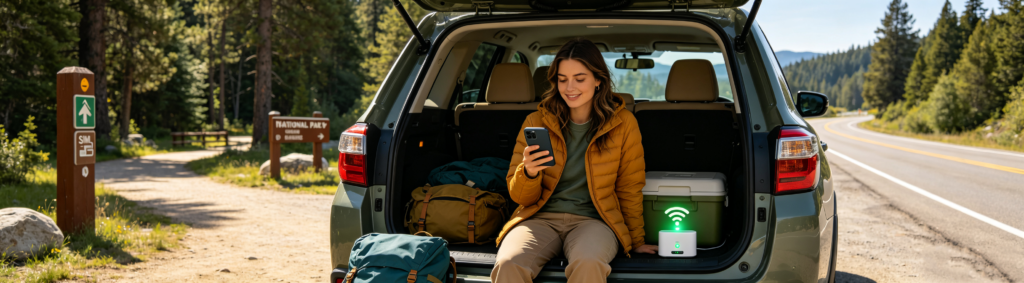
A lot of RV travelers simply use their regular carrier’s roaming service or add a temporary data package before heading out. It sounds convenient, but for a short two-week trip, it can be a surprisingly expensive way to stay connected.
Temporary add-ons from major carriers can cost quite a bit, especially when you only need extra data for a limited period. They’re also designed around your existing phone plan rather than the way people actually travel in remote areas. And because the add-on is tied to your regular account, it may come with extra fees or charges that aren’t always obvious at first glance.
A dedicated 7GB/15-day SIM card takes a much simpler approach. It’s built around the length and data needs of a typical short RV trip, giving you a defined amount of data for a defined period instead of paying for a much larger monthly package than you actually need.
Here’s why that combination works well for short RV vacations:
Overall, the appeal of a 7GB/15-day SIM card is less about having the biggest data allowance and more about matching the plan to the way a short RV trip actually works: limited travel duration, moderate daily data use, changing connectivity conditions, and a preference for simple, predictable costs.
For travelers who want enough mobile data for the road without turning a two-week vacation into a long-term phone-plan commitment, that balance can make a lot of sense.
- The validity period matches the trip: A fixed 15-day validity period lines up neatly with a typical two-week RV vacation. You can activate it when your trip starts and use it throughout the journey without paying for a long monthly cycle that extends well beyond your return date.
- 7GB is a practical middle ground: Very small data plans can leave you scrambling for more data halfway through the trip, while huge plans often leave a large portion unused. For travelers who mainly use mobile data for navigation, communication, travel information, and occasional media sharing, 7GB offers a practical balance between having enough and avoiding unnecessary excess.
- Flexible across different devices: Depending on the SIM and device configuration, it can be used in a phone or compatible mobile hotspot/router, making it possible to keep more than one type of travel device connected. That flexibility is particularly useful for RV travelers who don’t want to rely entirely on a phone.
- Simple setup for short-term travel: There’s no need to commit to a long-term carrier contract just for a short vacation. A travel SIM can be a straightforward option for people who want to activate connectivity specifically for a trip without changing their regular phone arrangement.
- Less dependence on campground WiFi: Instead of waiting for a crowded campground network to load a webpage—or driving somewhere just to find usable WiFi—you have your own mobile connection available wherever the underlying network provides coverage. That makes everyday travel planning more convenient and gives you another option when campground WiFi is slow or unreliable.
- Better suited to the realities of outdoor travel: A dedicated travel SIM can be useful on national park drives, mountain roads, campgrounds, and other outdoor areas where public WiFi simply isn’t available. That said, the SIM itself does not create coverage where the carrier network has no service. In remote backcountry areas, coverage will still depend on the local network and terrain, which is why offline maps and downloaded travel information remain important parts of a good RV setup.
Final Thoughts
The real appeal of RV travel is getting away from the fast pace of everyday city life. You can slow down, spend more time outdoors, and enjoy the freedom of being on the road without constantly checking the clock. But slowing down doesn’t mean completely cutting yourself off from the outside world.
Reliable navigation helps keep you on the right road. Up-to-date weather alerts can help you avoid dangerous conditions. A working connection lets you stay in touch with family and friends, while mobile data makes it easier to capture and share the best moments of the trip. These may seem like small conveniences, but together they make a short RV vacation safer, easier, and much more enjoyable.
After 15 days of real-world RV camping and road travel, I found that the 7GB/15-day SIM card lines up well with the needs of a typical short trip. It doesn’t try to win you over with an enormous data allowance or unnecessary extras. Instead, it offers a practical amount of data with a validity period that matches the trip itself.The result is a good balance: you can head into national parks, campgrounds, and more remote areas without depending entirely on public WiFi, while still having mobile data available for navigation, communication, weather updates, travel information, and everyday use whenever network coverage is available.
Most importantly, the goal isn’t to stay glued to your phone. It’s to have a reliable connection available when you actually need it, so you can spend the rest of the trip enjoying where you are.So, if you’re planning a roughly two-week RV road trip through the U.S. national parks and don’t want to overpay for a huge amount of unused data—or risk running out halfway through the trip—a 7GB/15-day SIM card is a practical option worth considering.
It gives you the connectivity you need for the road without turning your vacation into another complicated monthly phone plan, leaving you free to focus on what RV travel is really about: the open road, the mountains, the campsites, and the freedom to slow down and enjoy the journey.